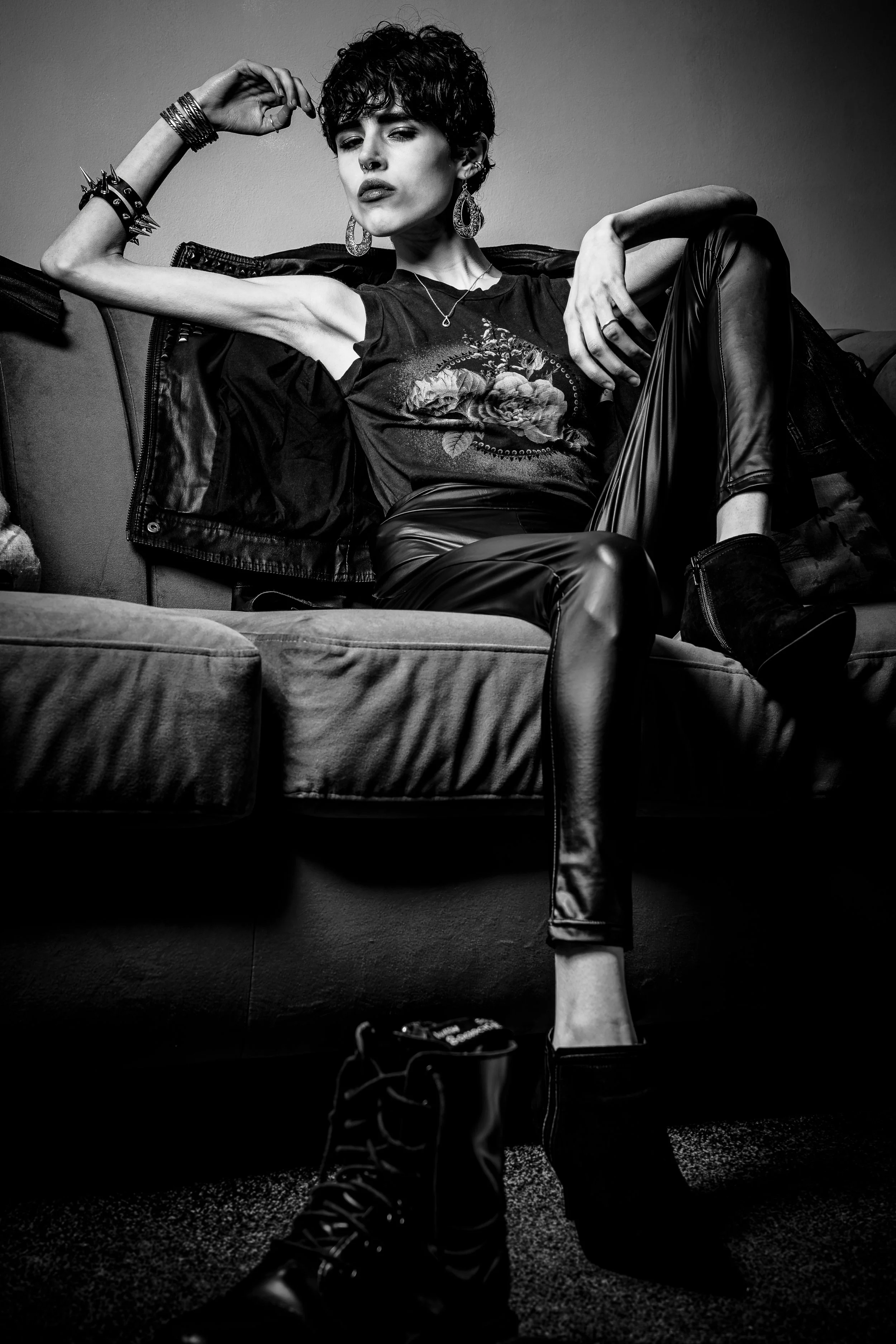
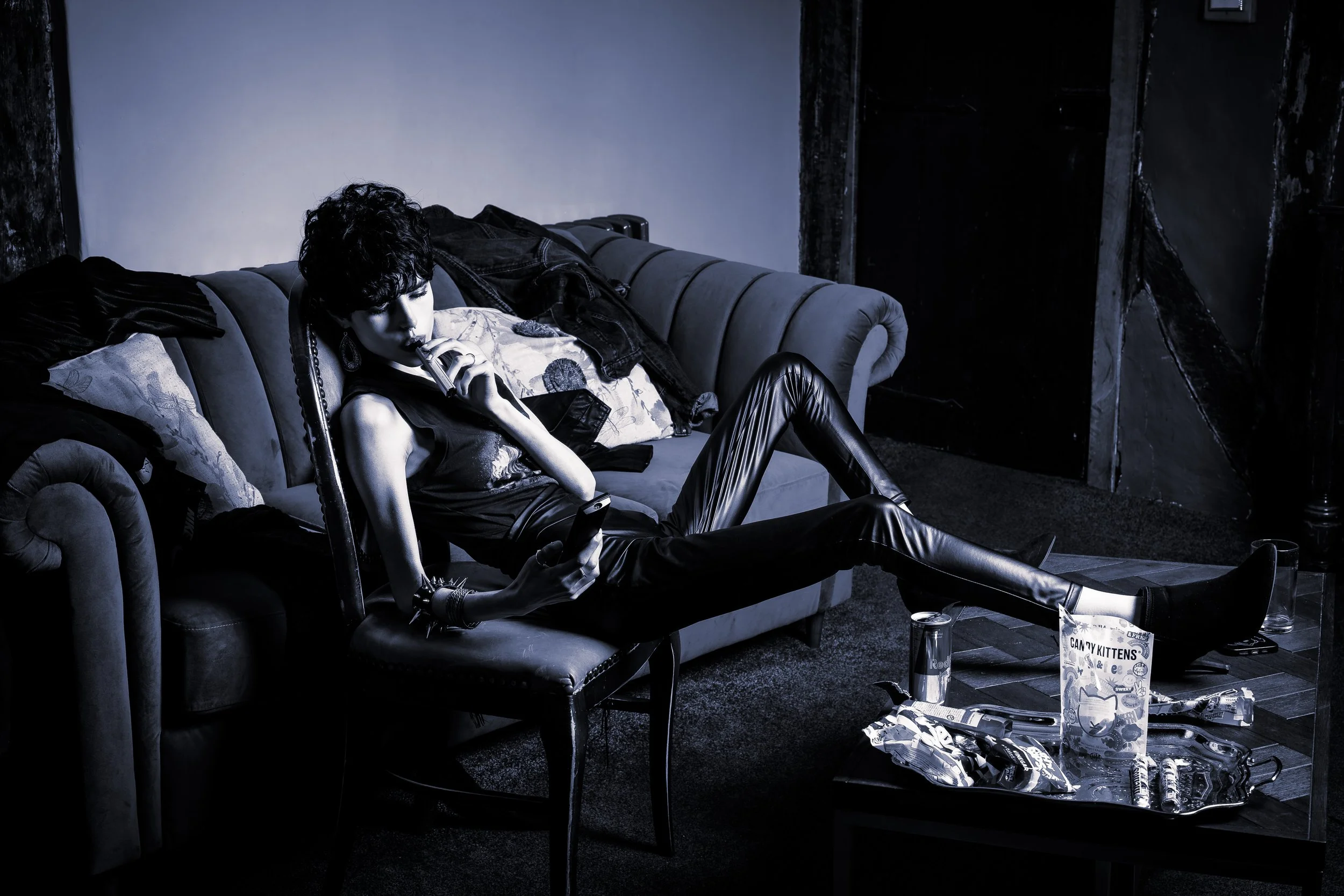
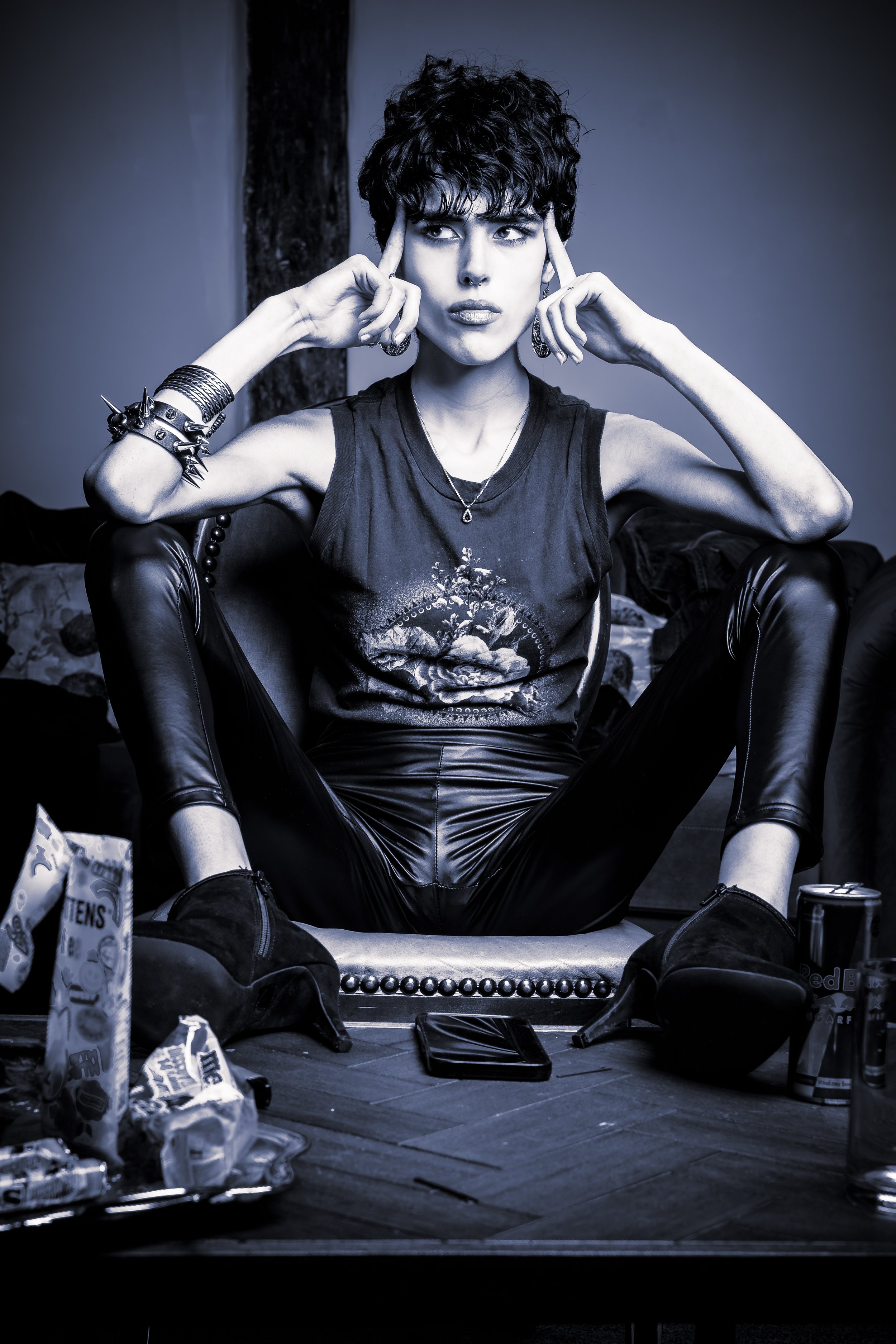
All plans canceled. Unavailable tonight.
She is young, single, and undeniably modern — but she doesn’t chase the noise of the city or the promise of last-minute plans. She belongs to a different rhythm. One that begins the moment she gets home.
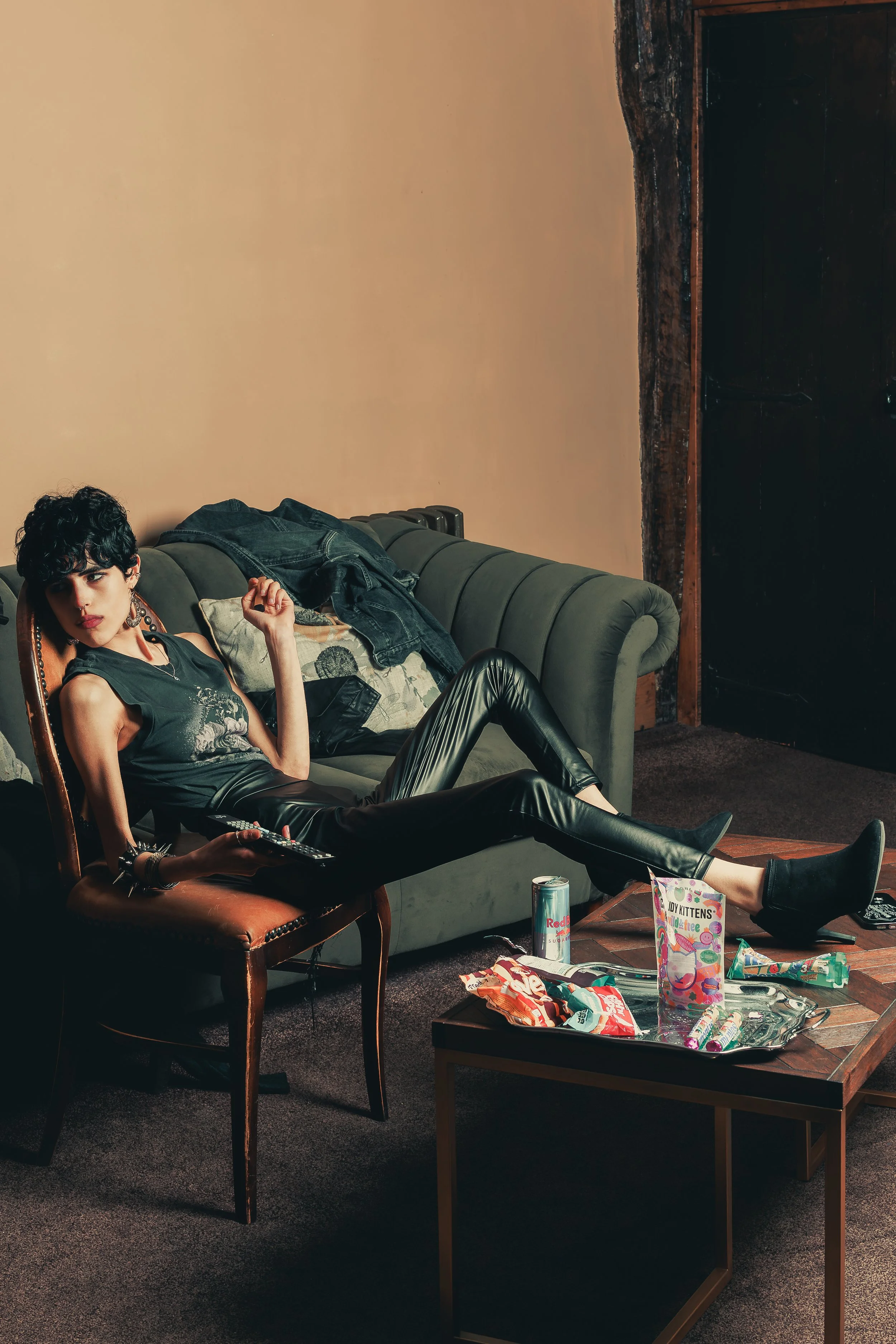
The room is quiet at first. Familiar light. A worn-in couch. Style still intact, even with nowhere to go. She settles in without ceremony, existing in the pause before the night asks anything of her. For a moment, nothing happens — and that is exactly the point. While the world scrolls, swipes, and searches for connection outside, she finds comfort inside her own space. Dating feels performative. Small talk feels exhausting. The idea of dressing up just to be seen feels unnecessary when she already knows who she is. Being alone isn’t a phase for her; it’s a preference. A luxury. A quiet rebellion.
Then the screen comes alive.
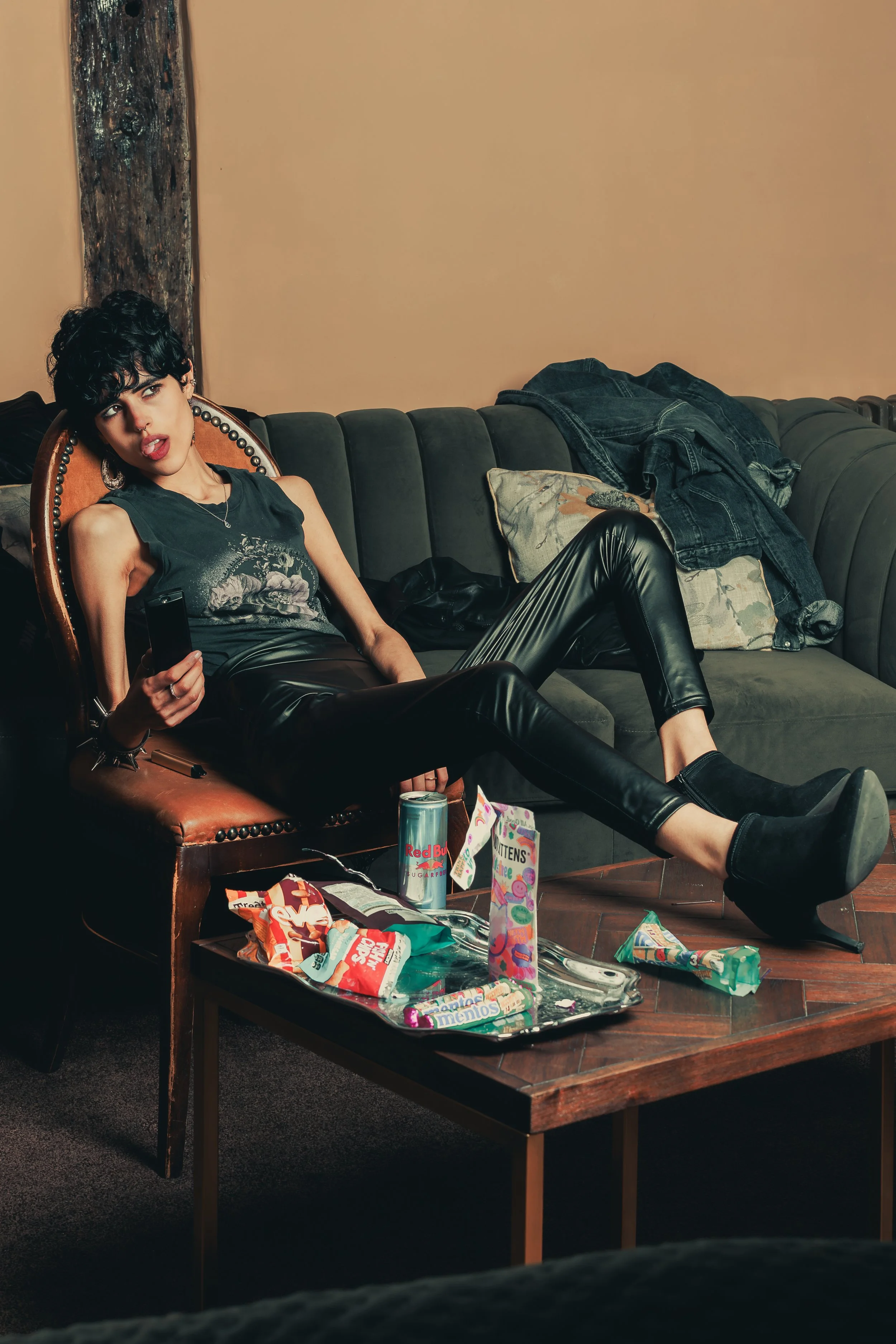
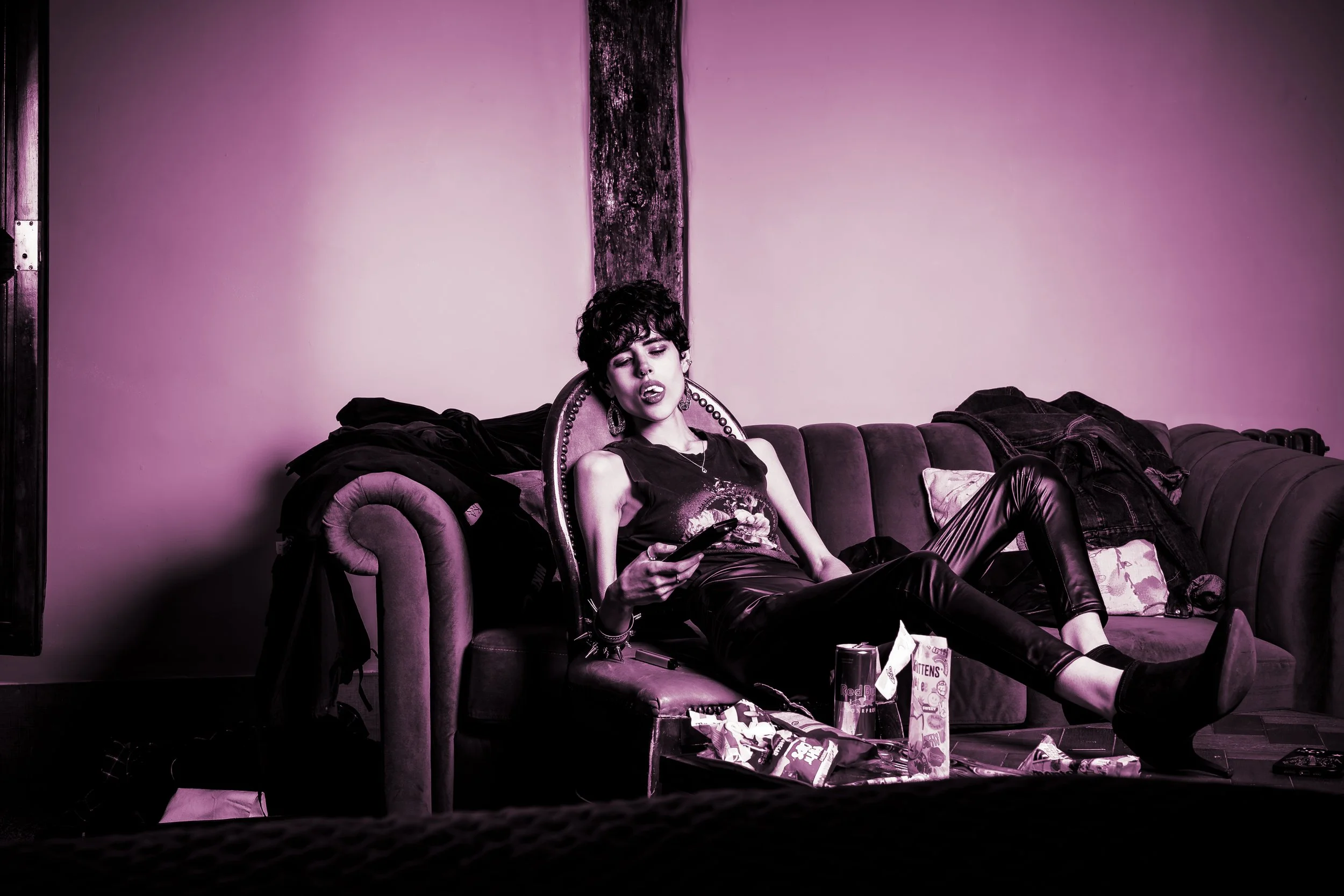
Old Hollywood films play loud, flooding the room with dramatic dialogue and swelling music. Light flickers across her face, reshaping the space, turning the living room into a private cinema. The night changes without moving. The television becomes the only guest — demanding, immersive, enough.
Snacks sit on the table, untouched for moments, then suddenly gone. She settles deeper into the chair, into the story, into herself. She watches movies not to escape reality, but to curate her own. She snacks like it’s a ritual. She lounges like time owes her nothing.
Her style is effortless but intentional — vintage silhouettes worn with modern confidence. Old-school values in a new-age body: independence, solitude, self-awareness. The afterparty doesn’t need noise, people, or validation. Just a screen, a chair, and permission to stay exactly where she is.
This is not isolation.
This is self-possession.
She doesn’t miss the party. She replaces it.
She is the girl who stays in — not because she has nowhere to go, but because she has already arrived.