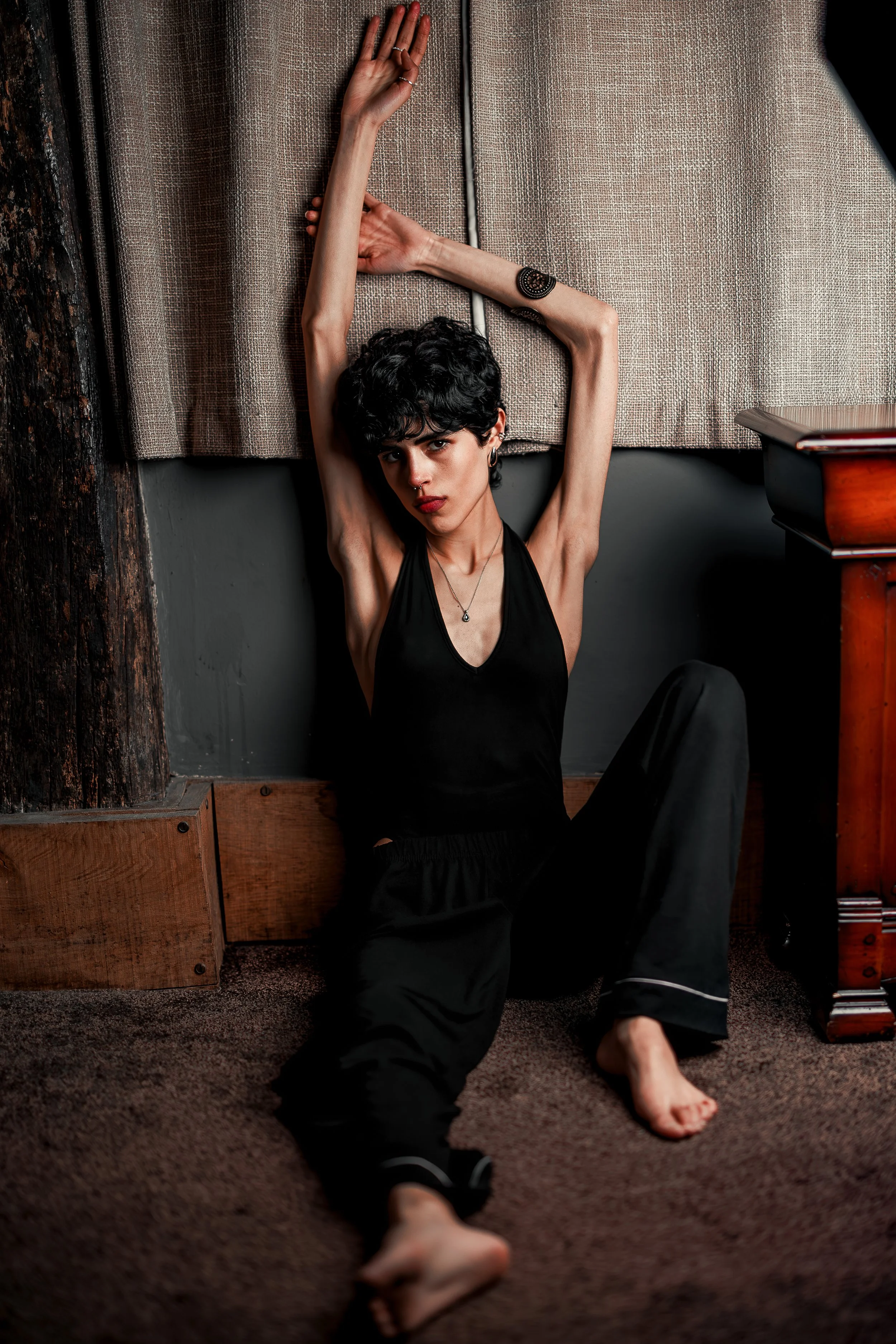
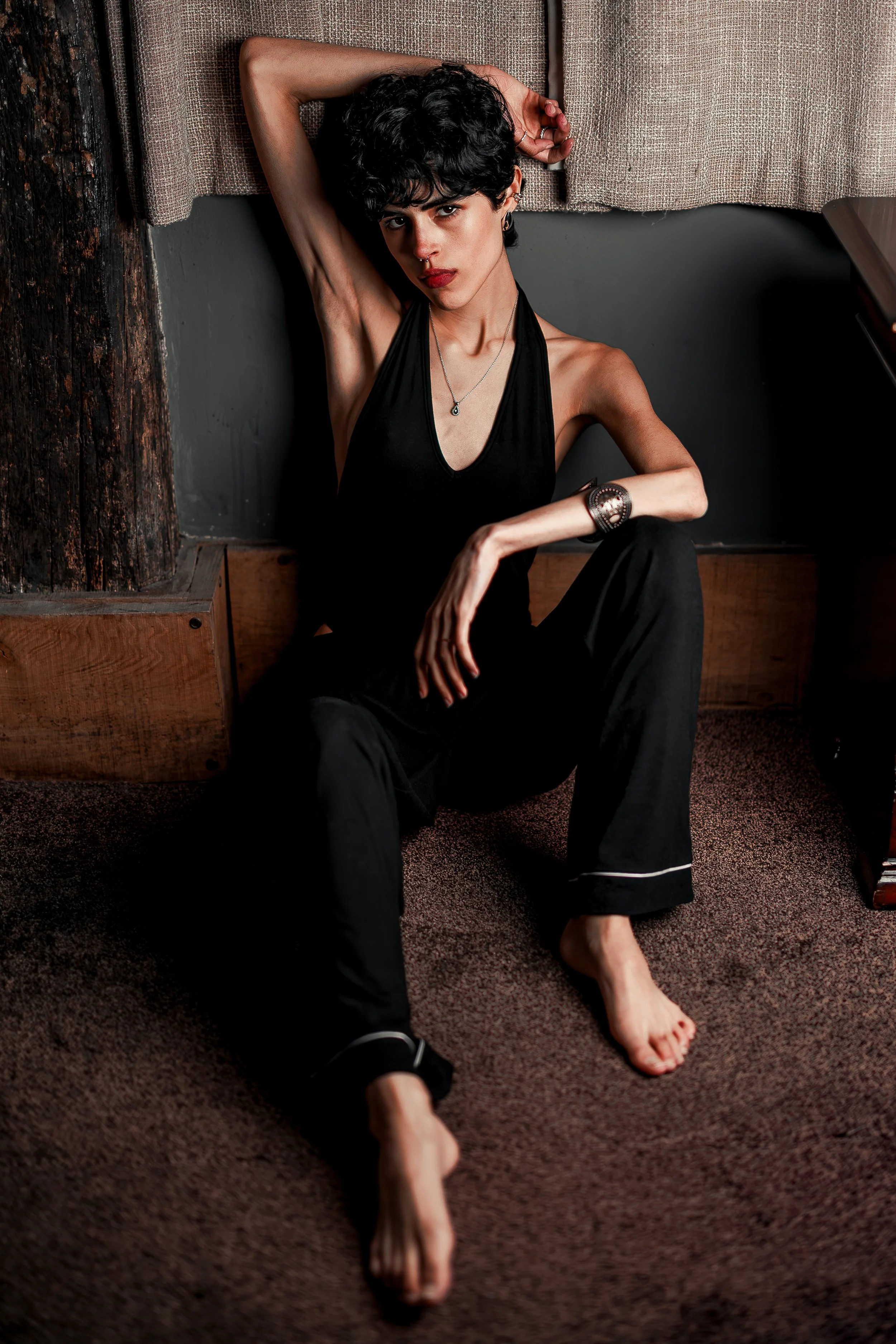
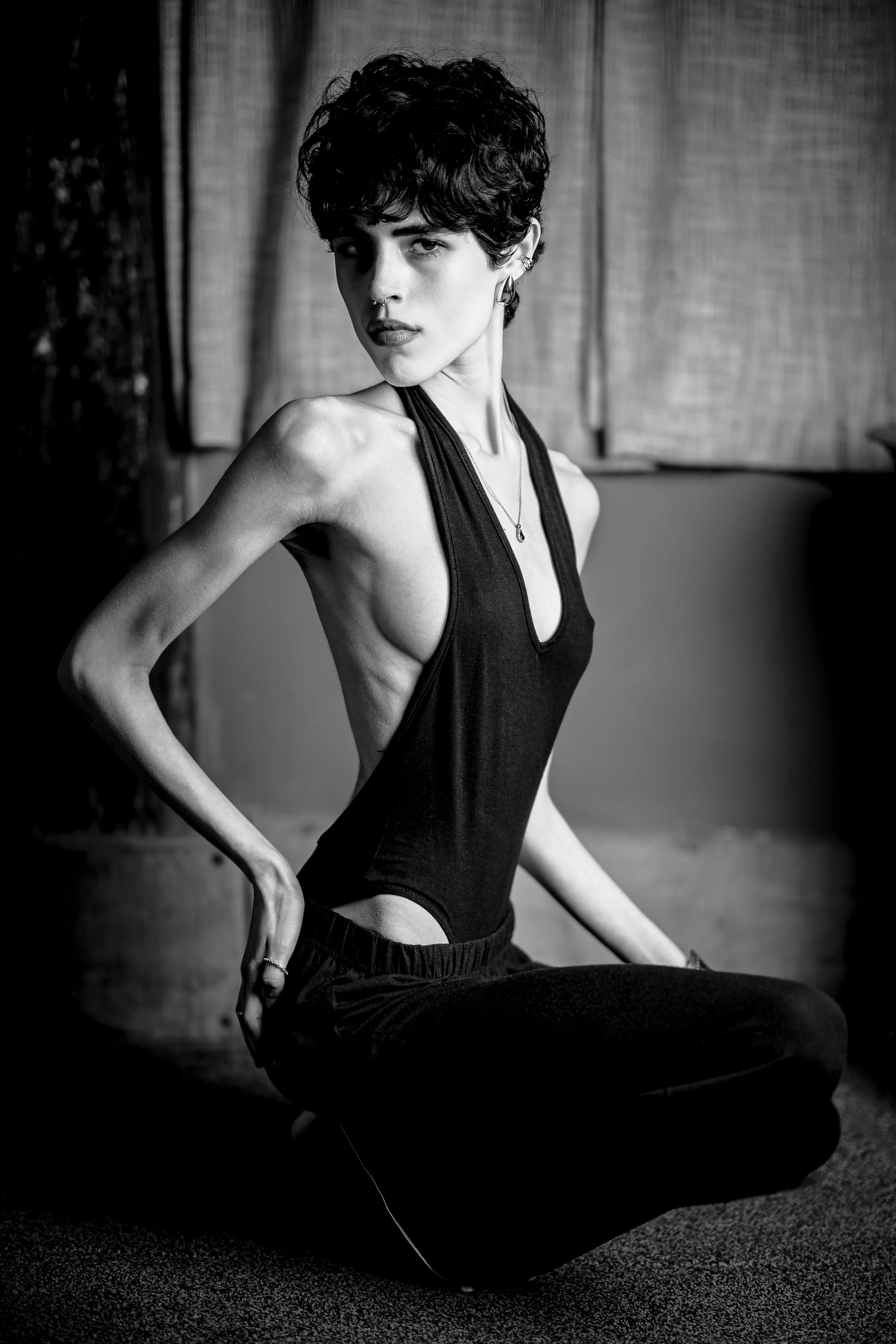
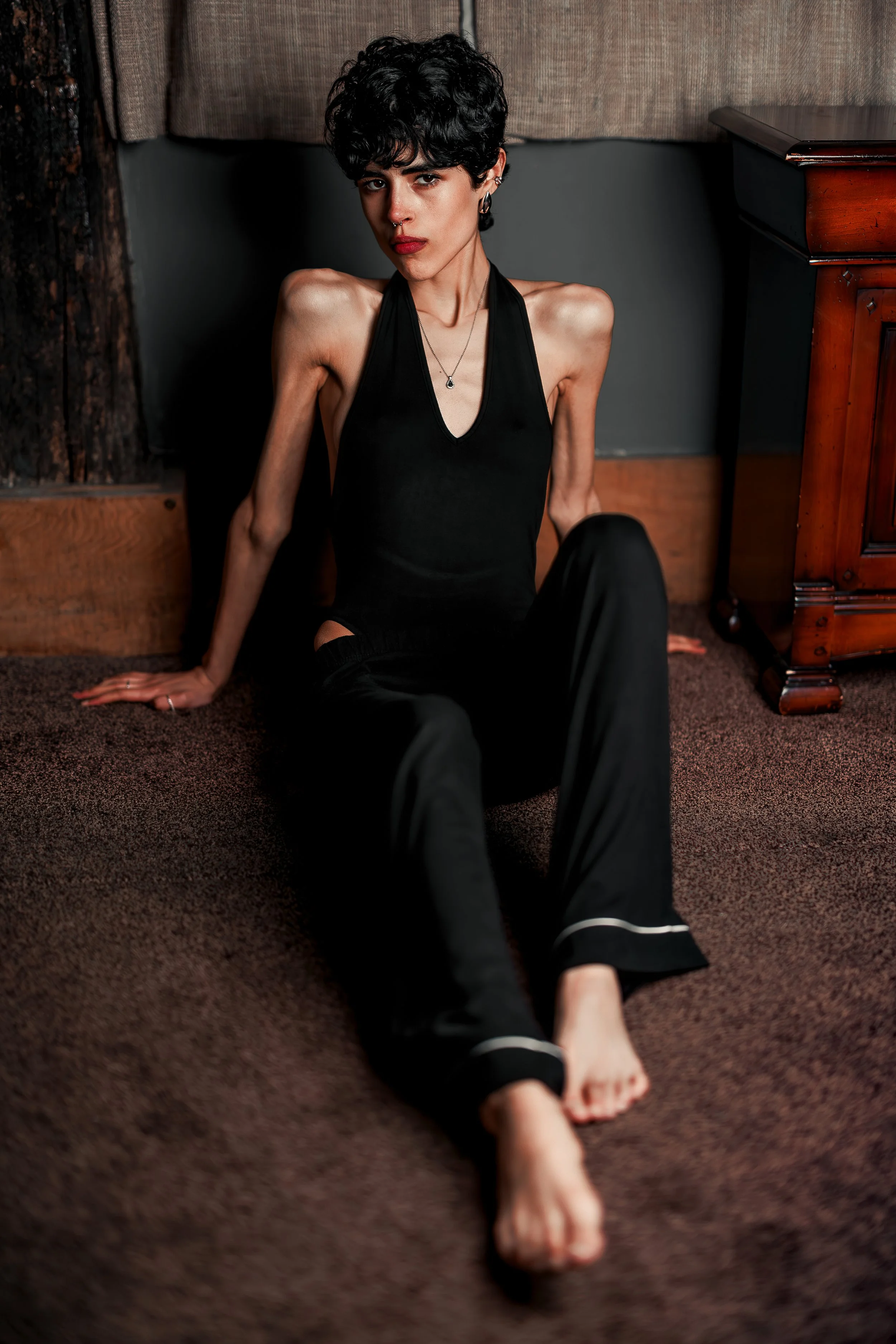
Thinness functions not as fragility, but as visual ambiguity.
In this series, the body is not soft, not comforting, not legible — it refuses interpretation. This editorial is a work of de-romanticisation, rejecting the expectation that a female body must exist for consumption, desire, or reassurance. Instead, it documents a body that occupies a third space: autonomous, unassigned, unresolved.
The model is not explained, contextualized, or softened. Her sharp collarbones, sunken shoulders, and slender frame are presented without narrative or apology. She does not perform femininity or masculinity; she exists in a space between, where conventional markers fail. Short hair, lean limbs, and stark angles strip away expectation, leaving a form that is neither a canvas nor a cipher — it simply is.
Her body resists classification. Too thin to be read as traditionally feminine, too delicate to be read as traditionally masculine, she occupies a liminal zone that challenges perception. There is no attempt to sexualize, romanticize, or domesticate her presence. The viewer is left without language, and therefore without ownership.
In this refusal lies freedom. A body de-romanticized, unsoftened, and unclaimed, asserting autonomy over form and perception. Thinness is not vulnerability; it is a site of ambiguity and reflection. The angles, the shadows, the raw minimalism — all demand attention without explanation. The editorial insists that bodies need not perform, need not comfort, need not translate.
They can exist as themselves, in stark presence, unframed by expectation.